
Bulkhead Fittings for SIP Planter Kits and DIY Systems
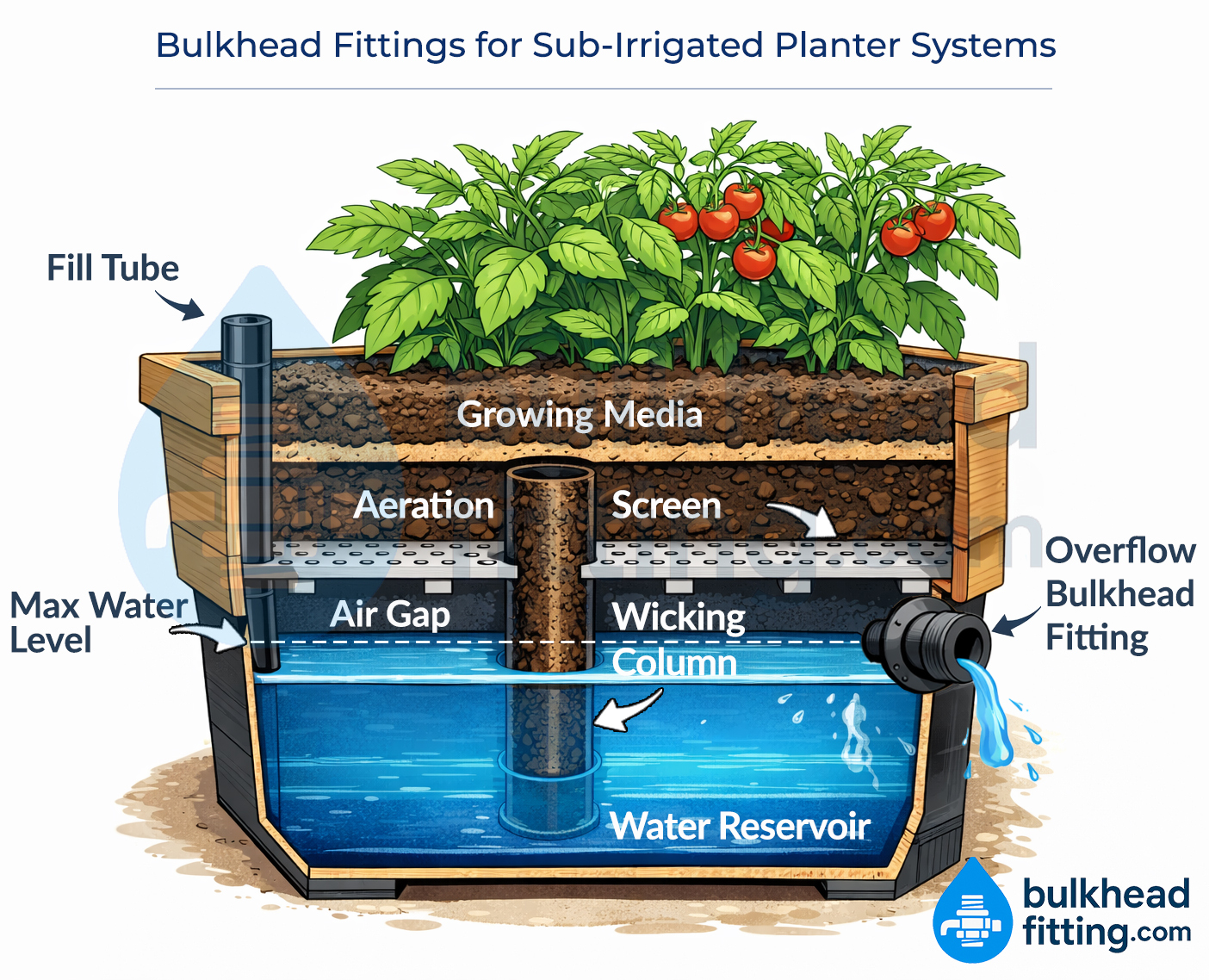
Sub-irrigated planters (SIP systems), often called self-watering planters, store water in a reservoir below the soil to provide consistent moisture to plant roots. These systems include a water reservoir beneath the soil that allows moisture to wick upward into the root zone.
To control the water level inside the reservoir, many SIP designs include an overflow outlet installed through the wall of the container.
A bulkhead fitting provides a simple way to create this watertight outlet. The fitting passes through the wall of the planter and seals using a gasket and locking nut, allowing excess water to drain once the reservoir reaches the correct height.
Bulkhead fittings are frequently used in SIP systems built from:
-
Raised garden beds converted into sub-irrigated planters
-
Plastic planters and decorative outdoor containers
-
Food-grade buckets used for DIY SIP systems
-
Large storage bins or tote-style planters
Because bulkhead fittings create a reliable, leak-proof seal, they are often preferred over drilling a simple hole in the container wall.
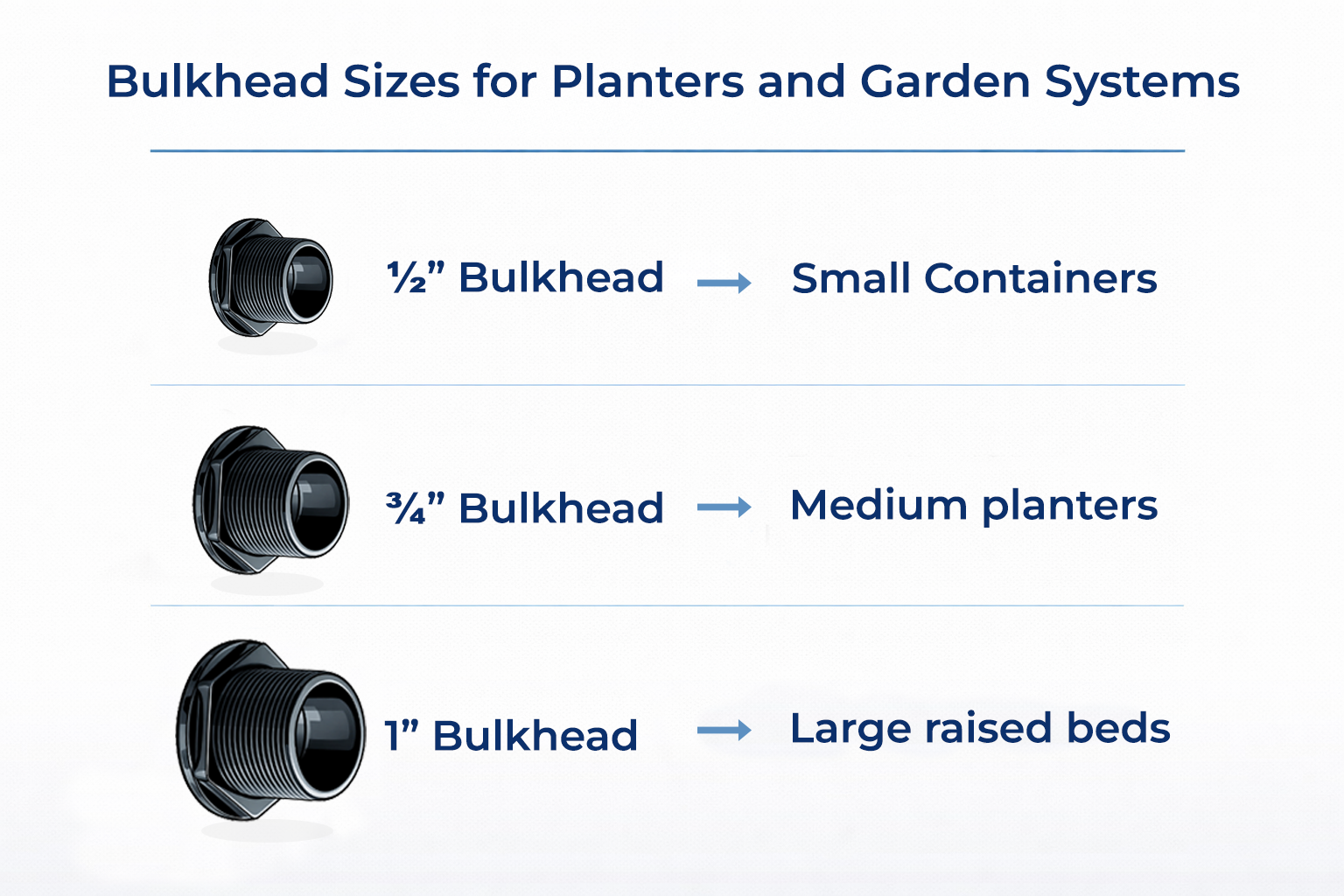
For most SIP planter builds, growers commonly use ½″, ¾″, or 1″ bulkhead fittings depending on the size of the container and the desired overflow capacity.
How SIP Planters Work
SIP planters contain three main zones: the growing media above, an aeration platform that separates soil from standing water, and a water reservoir below. A wicking column allows moisture to travel upward through the soil by capillary action.
Why SIP Planters Need an Overflow Drain
In many designs, the overflow fitting sets the SIP planter water level, allowing excess water to drain once the reservoir reaches its intended height. Gardeners building a DIY SIP planter often install a small bulkhead fitting in the container wall to create this overflow outlet.
- Prevents over-watering in SIP planters
- Maintains proper reservoir depth
- Allows excess water to exit through the overflow hole
- Protects plant roots from rot
What Size Bulkhead Fitting for SIP Planters?
Most SIP planters use 1/2″ to 1″ bulkhead fittings installed slightly above the water reservoir level to act as an overflow outlet. This prevents overfilling while maintaining the correct water level in the planter.
Recommended Bulkhead Sizes for SIP Planters
Bulkhead Fittings for Planters and Garden Systems
Bulkhead Installation Tips for SIP Planters
When installing a bulkhead fitting in a SIP planter, drill the overflow hole slightly below the aeration platform so the reservoir maintains a consistent water level while leaving an air gap beneath the soil.
SIP Planter Bulkhead FAQs
What size bulkhead fitting is used for SIP planters?
Most SIP planter systems use ½″, ¾″, or 1″ bulkhead fittings for the overflow drain. Smaller containers often use ½″ fittings, while larger raised beds or tote-style planters may use ¾″ or 1″ fittings to allow more water to drain from the reservoir.
Where should the overflow hole be placed on a SIP planter?
The overflow outlet is typically installed slightly above the reservoir level so excess water can drain once the container reaches the correct height. This prevents overfilling while keeping the soil above the waterline.
Why use a bulkhead fitting instead of drilling a hole?
A bulkhead fitting creates a watertight seal through the wall of the planter using a gasket and locking nut. This prevents leaks and provides a secure outlet for overflow drainage.