
Aquarium Overflow & Drain Plumbing Diagram
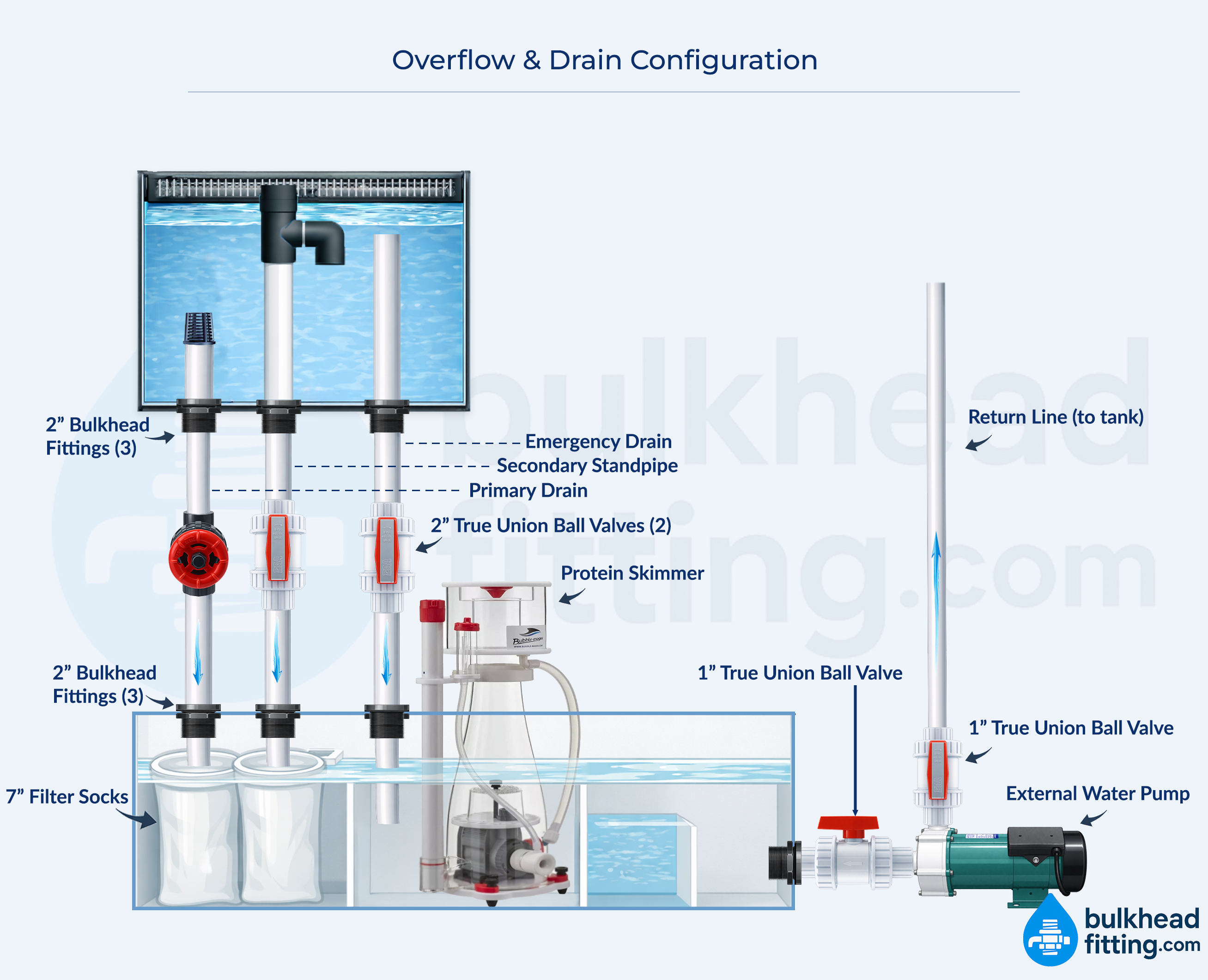
This diagram shows how water flows from your aquarium overflow to the sump and back again. It highlights key components like bulkhead fittings, drain lines, valves, and the return system so you can understand how everything works together.
How Aquarium Overflow Plumbing Works
Water exits the display tank through bulkhead fittings installed in the overflow box. From there, it travels down through the primary and secondary drain lines into the sump below. The primary drain handles most of the flow, while the emergency drain provides backup protection.
Inside the sump, water passes through mechanical filtration (filter socks), protein skimming, and other filtration stages before reaching the return chamber. An external water pump then pushes the filtered water back up through the return line and into the tank, completing the cycle.
Key Components in This Setup
● Bulkhead Fittings – Create a watertight seal where plumbing passes through the tank or sump walls
● Primary Drain Line – Handles the main water flow from the overflow
● Secondary / Emergency Drain – Prevents flooding if the primary becomes restricted
● True Union Ball Valves – Allow precise flow control and easy removal for maintenance
● Filter Socks – Capture debris before it reaches the rest of the system
● Protein Skimmer – Removes organic waste from the water
● Return Pump – Pushes clean water back into the aquarium
Optional Upgrade: Check Valve
A check valve can be installed on the return line to help prevent backflow when the pump is turned off. This adds an extra layer of protection against water draining back into the sump during power loss.
Each component in this setup plays a specific role in controlling flow, preventing overflow, and making maintenance easier.
Why Proper Plumbing Matters
A well-designed overflow and drain system helps prevent noise, flooding, and inconsistent water levels. Using quality components like properly sized bulkhead fittings and true union valves makes installation easier and maintenance more reliable over time.
Shop Components for This Setup
Build or upgrade your system with reliable, leak-proof components: