Aquaponics bell siphon systems are a reliable way to automate the flood and drain cycle in grow beds, allowing water to periodically rise and drain without timers or electronics. By using a standpipe, bell siphon, and bulkhead fitting, these systems maintain consistent water levels while delivering oxygen to plant roots. This method is widely used in aquaponics systems because it creates a self-regulating cycle that supports healthy plant growth and efficient filtration.
How a Bell Siphon Works in Aquaponics Systems
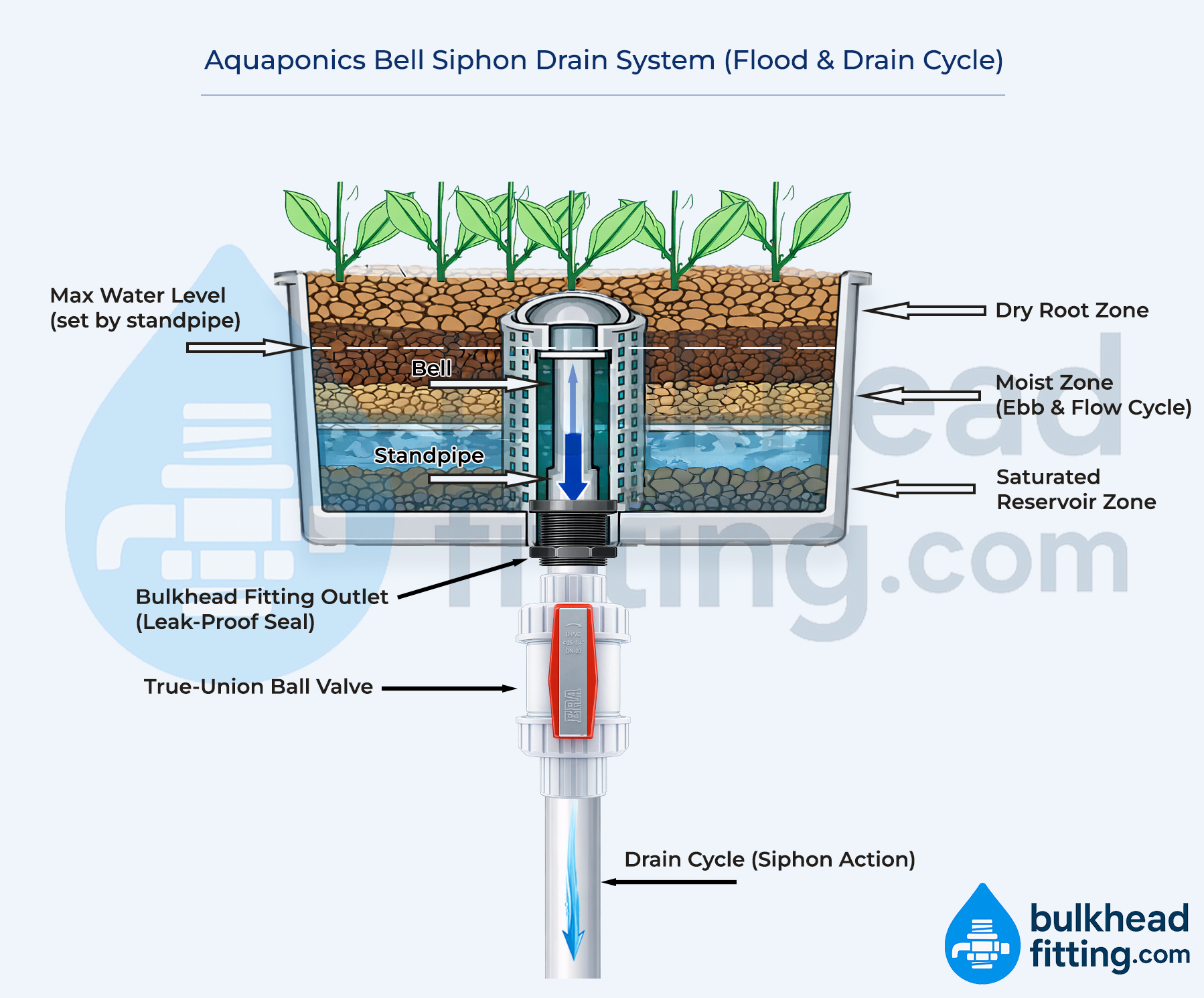
A bell siphon operates by triggering a rapid drain once water reaches a specific height inside the grow bed. As water fills the bed, it rises through the media until it reaches the top of the standpipe. At this point, the bell siphon activates and quickly pulls water down through the drain.
Once the water level drops below the siphon break point, air enters the system and stops the siphon, allowing the grow bed to begin filling again. This continuous flood and drain cycle helps deliver nutrients to plant roots while also introducing oxygen into the root zone.
-
Automatically cycles water without timers or electricity
-
Maintains consistent water levels using a standpipe
-
Improves root oxygenation during the drain phase
-
Commonly used in media-based aquaponics grow beds
-
Works with bulkhead fittings for secure, leak-proof drainage
To ensure a reliable, leak-free installation, many aquaponics systems use bulkhead fittings for grow bed drains, which create a watertight seal where the standpipe passes through the container.
Key Components of an Aquaponics Bell Siphon System
A bell siphon system relies on a few simple components working together to control water levels and create the flood and drain cycle. Each part plays a specific role in maintaining consistent performance and reliable drainage.
Choosing the Right Bulkhead Size for Aquaponics Systems
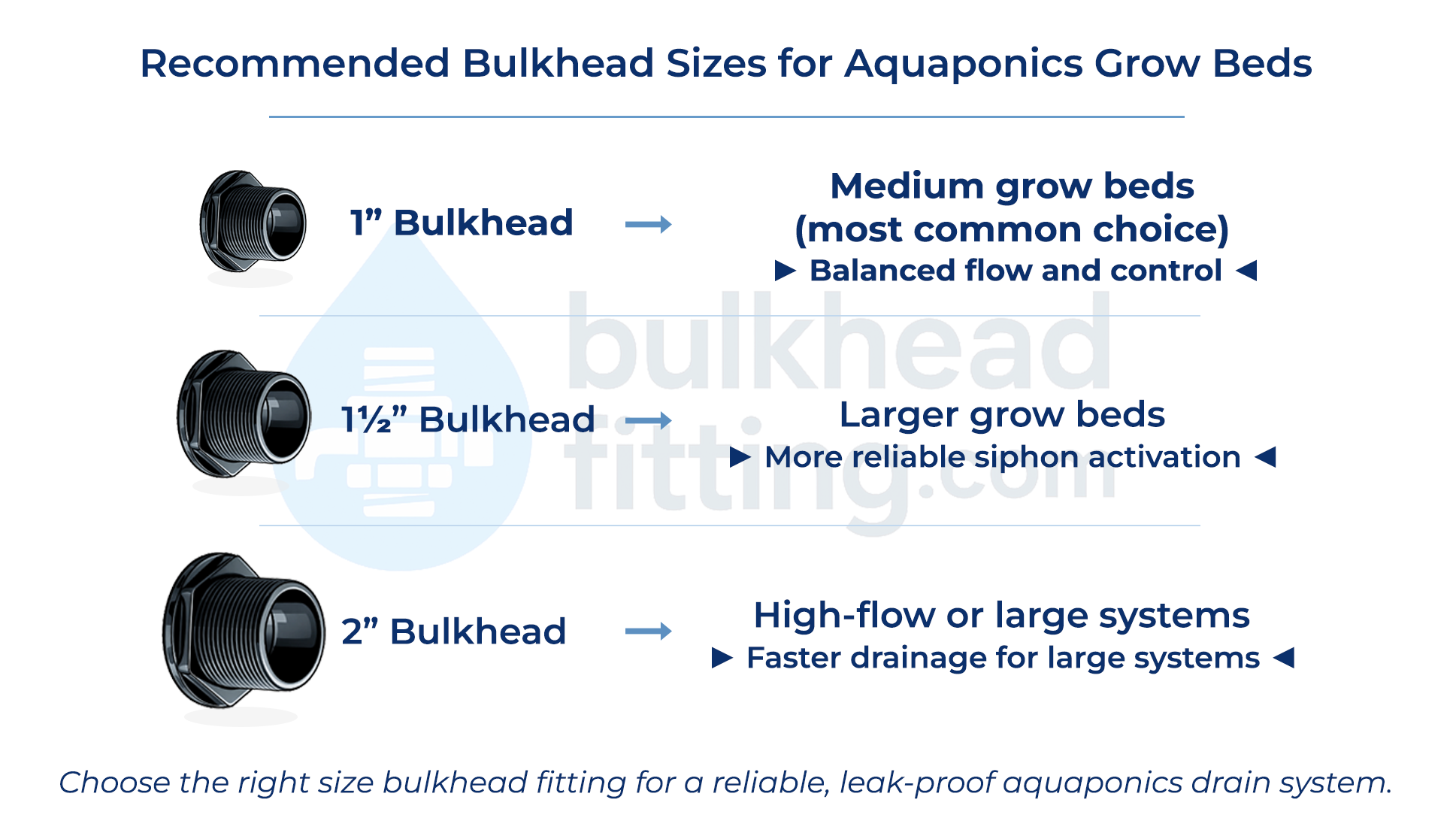
Selecting the correct bulkhead fitting size is an important part of building a reliable aquaponics bell siphon system. The size of the bulkhead directly affects how quickly water drains from the grow bed and how well the siphon cycle performs.
Common Bulkhead Sizes for Aquaponics
Most aquaponics grow beds use one of the following sizes:
-
½" to ¾" bulkhead fittings
Best for small systems or low-flow applications where slower drainage is acceptable. -
1" bulkhead fittings
A popular choice for medium-sized grow beds, offering a balance between flow rate and control. -
1½" to 2" bulkhead fittings
Ideal for larger grow beds and higher flow systems, allowing faster drainage and more consistent siphon performance.
Choose the Right Bulkhead Style
Bulkhead names are listed from the flange side first, then the nut side. Watch this quick guide before ordering.
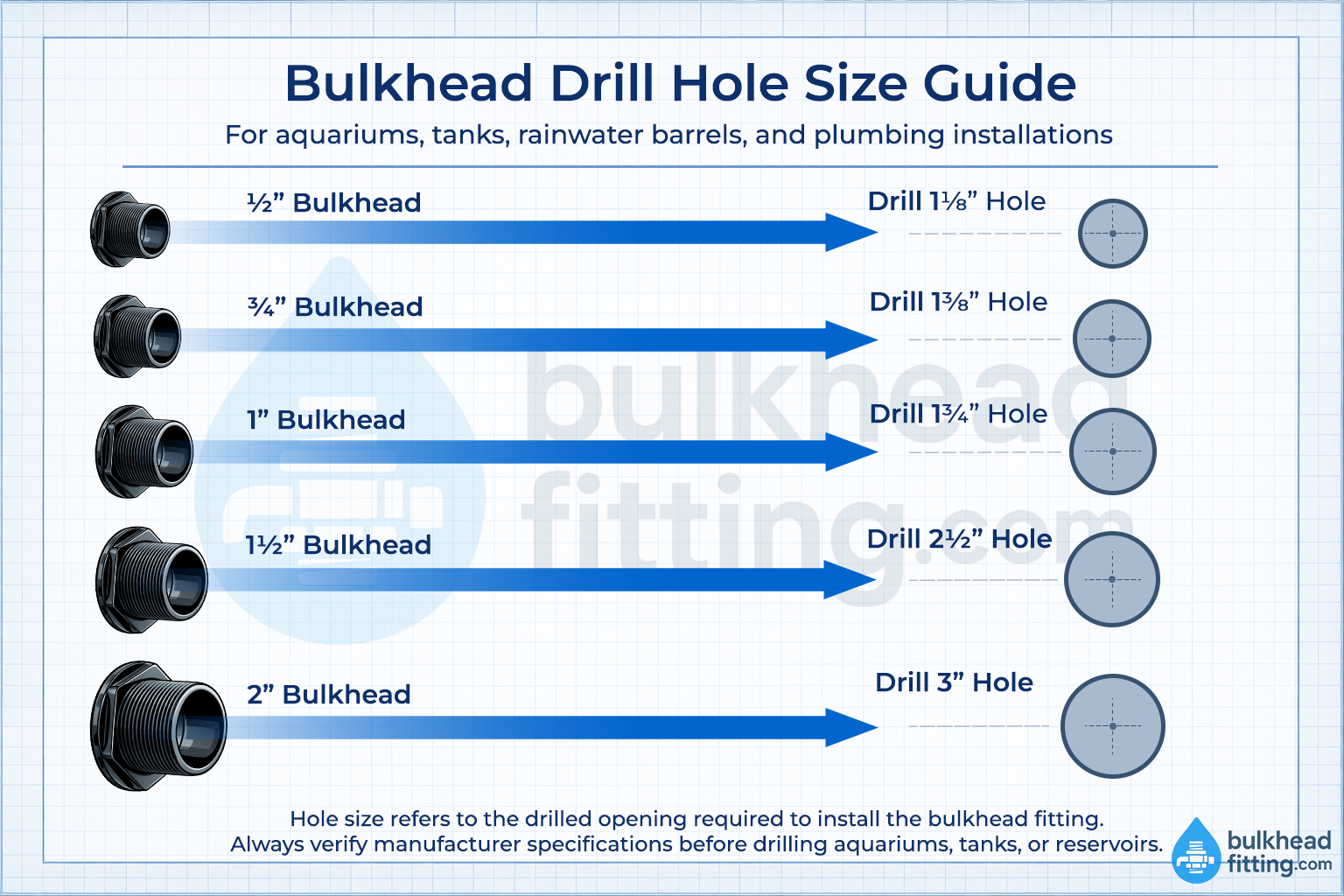
Before installing a bulkhead fitting, the correct hole size must be drilled through the tank wall.
Once you’ve selected the correct bulkhead size, drilling the proper hole is the next step to ensure a secure fit.
Bulkhead Installation Guide
Proper installation is just as important as sizing to achieve a leak-free seal.
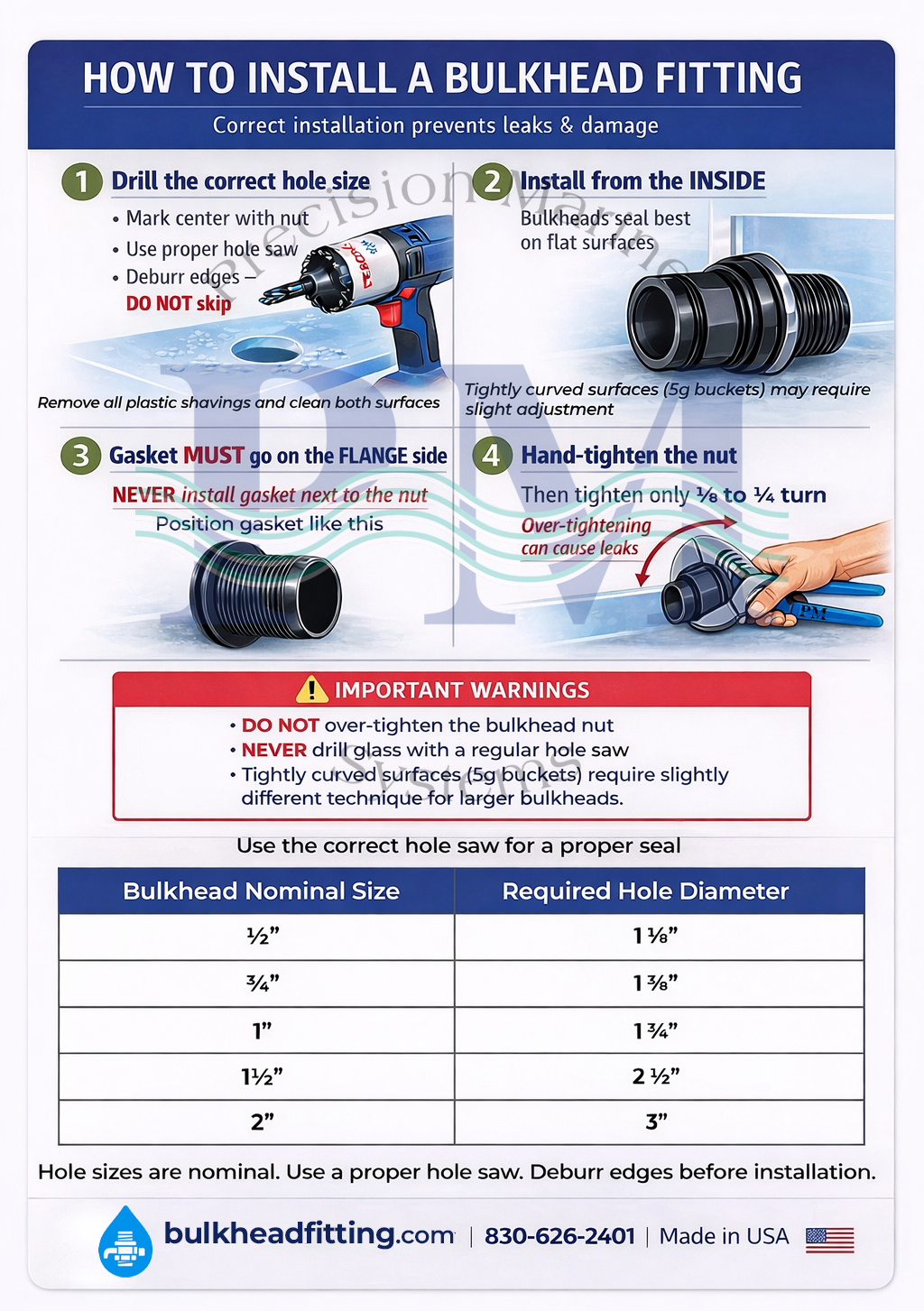
Click to view the full installation instructions
How Bulkhead Size Affects Siphon Performance
The diameter of the drain influences how quickly the bell siphon can remove water from the grow bed:
-
Larger bulkheads allow faster drain cycles
-
Smaller bulkheads create slower, more controlled drainage
-
Proper sizing helps ensure the siphon starts and stops reliably
If the drain is too small, the siphon may struggle to activate. If it is too large, the system may drain too quickly and become difficult to balance.
Matching Bulkhead Size to Your Grow Bed
When selecting a bulkhead fitting, consider:
-
Grow bed size and depth
-
Pump flow rate
-
Desired flood and drain cycle speed
-
Media type (which affects water resistance)
For many standard aquaponics setups, a 1" to 2" bulkhead fitting provides reliable performance and easier tuning.
Standpipe (Sets Water Level)
The standpipe determines the maximum water height inside the grow bed. As water rises, it fills the media until it reaches the top of the standpipe, which establishes the flood level for the system.
Bell Siphon (Triggers Drain Cycle)
The bell siphon sits over the standpipe and creates the siphon effect. Once water reaches a certain level, the siphon rapidly pulls water down through the drain until air enters and breaks the cycle.
Bulkhead Fitting (Leak-Proof Drain Connection)
The bulkhead fitting forms a watertight seal where the drain passes through the grow bed. This is one of the most critical components, as it prevents leaks and ensures reliable operation over time.
Drain Plumbing (Controls Flow)
Below the grow bed, plumbing such as pipes or valves directs water back to the reservoir or fish tank. In some setups, a valve can be used to fine-tune flow rates and improve siphon performance.
When properly sized and installed, these components work together to create a consistent, self-regulating flood and drain cycle in aquaponics systems.
Aquaponics Bell Siphon System FAQs
Common Questions About Bell Siphon Systems
How does a bell siphon work in aquaponics?
A bell siphon automatically drains a grow bed once the water reaches a set height. As the water level rises, it triggers a siphon effect inside the standpipe, rapidly draining the bed before resetting and repeating the flood and drain cycle.
What size bulkhead fitting should I use for a bell siphon?
Most aquaponics systems use:
-
1" bulkhead fittings for small to medium grow beds
-
1½" bulkhead fittings for larger beds or more consistent siphon performance
Larger fittings allow more reliable drainage and easier siphon initiation.
Why won’t my bell siphon start?
Common causes include:
-
Insufficient water flow into the grow bed
-
Standpipe diameter too large or too small
-
Poor air seal inside the bell
-
Incorrect height differences between components
Proper sizing and flow balance are key to reliable operation.
Why won’t my bell siphon stop draining?
If the siphon won’t break, it’s usually due to:
-
Lack of air entering the bell
-
Drain line too restrictive
-
Standpipe not allowing enough air to enter
Adding a small air gap or adjusting flow often fixes the issue.
Do I need a specific type of bulkhead fitting for aquaponics?
Yes—use a high-quality, leak-proof bulkhead fitting with a proper gasket. This ensures a secure seal at the base of the grow bed and prevents leaks during repeated flood and drain cycles.
Where should the bulkhead fitting be installed in a grow bed?
The bulkhead fitting is typically installed:
-
At the bottom of the grow bed
-
Centered or slightly offset depending on layout
This allows complete drainage and proper siphon function.
Can I use a threaded or slip bulkhead for a bell siphon?
Both can work:
-
Slip (glue-in) is common for permanent installations
-
Threaded (NPT) allows easier removal and adjustments
Choose based on whether you want flexibility or a fixed setup.
What is the ideal flow rate for a bell siphon system?
The ideal flow rate depends on grow bed size, but generally:
-
Enough flow to trigger the siphon
-
Not so much that it prevents the siphon from breaking
Balancing inflow and drain capacity is critical.
Common Components for Aquaponics Systems